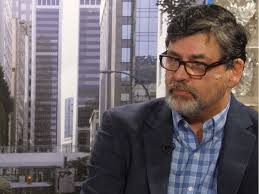
People reading this are already thinking, “Who the hell is Markham Hislop, and why is he worth writing about?”
Both are fair questions, and I will answer both.
Markham Hislop is a failed digital news media producer who rebranded himself a few years ago as an energy expert. He tried formed an outlet called Beacon News about a decade ago. The content was uninspiring and he used what he called “advertorials” where paid space was dedicated to OpEds. I believe Craig Chander’s PGIB used that service.
The Beacon failed and Hislop retreated to the West Coast where he formed Energi News from the table of a McDonald’s outlet. That’s all fine. Many startups are lean and it’s a free market.
Hislop is a bitter little man, though,h and holds successful media outlets in contempt. He was howling online and threatened to report the Western Standard to AHS for COVID violations because the Standard remained in operation during the pandemic for example. He really gets upset seeing outlets succeed where he failed.
The problem is he didn’t and still doesn’t know a damn thing about energy. He has no experience or education in the industry, yet he chose that niche to carve out a little spot for himself on the internet. From there, he has blathered about an energy transition that hasn’t happened and continues with failed peak oil predictions.
Now, that’s not a problem in itself. The internet is loaded with bullshit artists.
The problem with Hislop is that some legacy media outlets give him oxygen and some people may be fooled into thinking this guy has a clue what he is talking about.
He appears regularly on a talk radio show in Alberta and the host gets roasted for it every time. Alberta is jam packed with real energy experts. Why does this outlet insist on bringing Hislop on?
Further, how does Hislop pay his bills?
His website isn’t subscription-based and appears devoid of any advertising of substance. His YouTube channel barely registers a blip.
Still, he continues to produce content and share it with any platform willing to give him time. Is his site sponsored by energy transition activists perchance?
That certainly would explain some things.
Either way, it’s important that folks like Hislop are documented online. When people are scratching their heads and wondering who the hell the guy they listened to on the radio was and Google the name, it’s important that they find a source to explain his background and his presence.
If it sounds like he doesn’t have a clue what he is talking about, it’s because he doesn’t. Your ears don’t deceive you.
Don’t take anything you hear from him seriously.
My public service posting for the month.
Thank you for this. What this Markham Hislop says seemed really fishy and bitter to me. Your article helps me to see that my instinct was correct.
Hi Cory
I couldn’t find a way to contact you directly through email, so what follows is an extremely long comment. I followed a number of your videos, and I think that we agree on almost everything, including the advantages for our Aboriginal people in becoming citizens of an independent Alberta and Saskatchewan, the economic viability of an independent republic, our negotiating strengths vis a vis our landlocked status, etc..
Since late April I’ve had the rather startling experience of having responses from central Canadian journalists, to my objections to their dismissal of the Alberta Independence movement. Other than an earlier one from John Ivison, the next three have been very positive exchanges.
I’m into a very long back and forth with David Olive of the Toronto Star who wrote a highly criticized article on April 27th, in which he suggested that Albertans are tiresome whiners, and that maybe it would be best for all around if they leave. I took issue with his article, and to my great surprise he responded with an apologetic note and acknowledge that his article had been unhelpful and divisive. We agreed to enter into a conversation and it has been most encouraging. I can send it to you if you wish.
Best regards
Dave Reesor, Westman Village, Mahogany, Calgary
My email is davereesor20@gmail.com
The following back and forth is with another journalist, Kevin Carmichael, and my rebuttals are similar to the ones I made with David Olive, although additionally I have made an extensive rebuttal to David Olive’s exhaustive enumeration of the bureaucracy we would need to create to replace the excellent bureaucracy? we now enjoy, paid for by all Canadians. Olive walked into it; bureaucracy is one of my favorite subjects. I can send that separately if you’re interested.
My response to Kevin Carmichael’s article.
On Fri, May 23, 2025 at 3:18?PM Dave Reesor wrote:
Good article Kevin, but I do have one caveat. You imply that Daniel Smith has more or less concocted Steven Gilbeaux as the adversary she needs. Steven Gilbeaux is the adversary that already exists, along with his former boss Justin Trudeau, and his current boss, Mark Carney. If anyone thought Canada was going for a shift in direction post Trudeau, Carney certainly didn’t signal it with his cabinet picks.
I’m an Alberta separatist and have been for about 10 years. It’s been a long progression to get to this point, but about 10 years ago, toward the end of Stephen Harper’s administration, I reluctantly acknowledged, that even with a conservative government there were insurmountable impediments to Alberta’s equal participation in Canada.
Triple E Senate for instance, and excessively unequal representation in the House of Commons.
A completely different way of calculating Québec’s and Alberta’s fiscal capacity when it comes to Equalization payments.
And of course, Justin Trudeau was right when he said that Canada had no core national identity. Blanchette is wrong, Quebec has one culture, the Maritimes another, Ontario another, and Alberta and Saskatchewan something significantly different, and it’s not just oil and gas. It’s an attitude.
Becoming a separatist was a gut-wrenching decision for me because my family pioneered what is now Markham Ontario in 1804, and my grandfather was a pioneer in the Northwest Territories in 1902. But I have a number of grandchildren, and now five great-grandchildren and more on the way, so this isn’t about me. I’m fine, it’s about them.
We already have one grandson in Houston, and another just graduated engineer that is moving to Denver next month. Those opportunities should have been in Alberta or in Canada, but Central Canadian dictated policies have severely truncated Alberta’s potential, and Canada’s as well.
I think it’s time to face reality and realize that we would all be better off as independent countries, united in a free trade common market, sadly, something we don’t have even in what is supposed to be a single nation.
Best regards
Dave Reesor
Calgary
The response from Kevin Carmichael
Hi Dave. Thanks for sharing this. I spent my university days writing essays about Maritime independence, so I have lots of sympathy for your point of view. I’m even open to your idea of a common market, except I don’t know how you would account for history. First Nations? All that Eastern wealth that developed the West? How do you make good on all of that? Alberta and Saskatchewan would be fine on their own, but I don’t know what would become of the Maritimes. I don’t know. It feels like the rational thing to do is give the federation one last try.
My point about Smith and Guilbeault was that he’s a bogeyman now, not anyone with real influence over the direction of policy. He’s been marginalized. Alberta is going to get more access to tidewater, pretty sure. It should have happened sooner. Lots of mistakes along the way, including by Harper and the oil industry. I interviewed the CEO of Cenovus the other day. He conceded they took support for the industry for granted. I agree Trudeau was the biggest problem, but he wasn’t the only one.
I’ll also suggest that Carney deserves a chance before we write him off. Choosing Hodgson as energy minister, while dumping Wilkinson, was a pretty strong signal. The oil and gas industry asked for that change specifically. I’ve seen industry get what it wants often, but can’t think of a time when it chose its cabinet minister,
Kevin
From Dave
Hi Kevin. Thanks for responding, and thanks for having an email address so that I could respond. There are a lot of journalists that put out controversial, or even just thought provoking ideas, but leave no opening for readers to agree or disagree. I’ll go through your points one byone. Kevin.
First Nations?
Dave’s response. First of all, there are many First Nations leaders and Metis that are 100% behind Alberta independence. For some reason they don’t get interviewed by CBC or any of the rest of the mainstream media. But my response to First Nations people that are concerned about Alberta separation is: “You’ve been involved with Ottawa for 160 years. How’s that been working out for you? There’s nowhere for you to go but up.” And I’ve been to a number of separatist meetings, and while there are lots of different opinions about the path forward, one of the most consistently agreed on ideas is, that whatever happens, First Nations people need a better deal, and it’s to everyone’s advantage to have them fully involved and engaged in both commerce and culture in a new independent country
Kevin.
All that Eastern wealth that developed the West? How do you make good on all of that?
Dave’s response. I would think that the $750 billion net that Alberta has contributed to the Canadian fund over the last 60 years would be a good start on that repayment. I would also point out that it’s Easterners that have blocked hundreds of billions of dollars’ worth ofinvestment in Western Canada, particularly over the last 10 years. That’san externally imposed opportunity cost, and it’s cost Albertans far more than Trump has. I don’t share your view, that Eastern investmentin the West, particularly the railroad, was benevolence. I’d refer you to John A McDonald’s National Policy. First of all, it was to stop American northward expansion. Second, it was to populate the West with farmers. Third, tariffs were imposed in order to compel those thousands of newly minted WesternFarmers to buy Canadian made automobiles and farm machinery at a higher price than they could have bought them from the United States. The policy was meant to build Central Canada’s manufacturing base. And fourth, I had experience with this during the 30 years that I spent growing up on the farm, and farming. The Canadian Wheat Board was created, for good reasons at the time, but remained in place far too long. Farmers on the Prairies were compelled to sell their wheat and barley and oats to the Wheat Board, Ontario and British Columbia farmers were not. I know one farmer that hauled a small load of wheat across the border into Montana in the late 1990s. He was arrested by the RCMP, spent a bit of time in jail, and had his truck confiscated. Presciently, he had used one of his old trucks because he suspected that he would be treated as a criminal. Stephen Harper pardoned him.
Kevin. Alberta and Saskatchewan would be fine on their own,but I don’t know what would become of the Maritimes.
Dave’s response. The Maritime Provinces plus Newfoundland and Labrador have a combined population of about 2.5 million.There are succesful countries with smaller populations than that. Altogether, those provinces have enormous natural resources, including oil and gas, minerals, and an opportunity for far more tourism. Maritime budgets are now about 20% subsidized by Equalization payments. There’s no question that they can make that up. If I lived there my goal would be to come together as one country, develop those resources without interference from Ottawa, and then make free and fair trade arrangements with both the United States and Canada, arrangements that would include a defense agreement. I would hate to be a grandfather that bequeathed to my grandchildren a culture of dependency onother people’s labor.
Kevin. I don’t know. It feels like the rational thing to do is give the federation one last try.
Dave’s response. How many tries until you giveup? Alberta and Saskatchewan tried at the outset, but then fought from 1905 until 1931 before they got ownership of their natural resources, like all the other provinces already had. They were considered colonies, a word that Sir Wilfred Laurier actually used. We established an oil industry in 1948, and became prosperous, but then in 1962, Pierre Trudeau, together with his sidekick, Mark Lalonde,brought in the unconstitutional National Energy Program. Our own small business lost fifty percent of its sales in six months. Thousands of businesses went bankrupt. Mark Lalonde later admitted, there’s a video, that the underlying raison d’etre for the program was that Alberta could not be allowed to become the economic center of Canada. The oil industry had already shifted its headquarters from Toronto to Calgary, and several banks had been planning to move their head offices to Calgary, and one actually did.
Kevin. My point about Smith and Guilbeault was that he’s a bogeyman now, not anyone with real influence over the direction of policy. He’s been marginalized. Alberta is going to get more access to tidewater, pretty sure. It should have happened sooner.
Dave’s response. He’s been succeeded as Environment Minister by his former assistant who may well be at least as radical as he was. If the Carney that we’ve got is not 180° different from the old Carney who revealed his globalist ambitions in his book; Values, then the environment portfolio will override the energy portfolio. In Carney’s mind, energy is wind and solar and hydro.
Kevin. Lots of mistakes along the way, including by Harper and the oil industry. I interviewed the CEO of Cenovus the other day. Heconceded they took support for the industry for granted.
Dave’s response. In total agreement here. I have connections with some in the oil industry, and I have routinely castigated their industry for its insouciant approach to marketing their commodity. Stored biomass, (better than fossil fuels,) is the commodity that has lifted the West out of poverty, it is now doing it for China and India, because, let’s face it, they still largely depend on coal and oil, and will for decades into the future. We could reduce their emissions by providing Canadian Natural Gas. I’ve been to Africa a number of times on business, but I’ve also been out in the villages and seen what energy poverty looks like. The women there spend many hours each week gathering sticks or dung or paying money that they don’t have to buy charcoal to provide cooked meals, and smoky warmth. It kills millions, prematurely, from lung diseases. In jurisdictions like ours that have access to cheap, reliable, stored biomass generated electricity, we spend a couple of hours a week and purchase more than enough reliable and clean electricity, which provides light and heat and cooking and cooling, and numerous conveniences unimaginable even to our grandparents. It should be noted that Mark Carney was the instigator of an international banking organization whose aim was to refuse loans, including to developing nations, that were for the development of that stored biomass. It was sociopathic neocolonialism, but fortunately the initiative is falling apart.
Kevin. I agree Trudeau was the biggest problem, but he wasn’t the only one.
Dave’s response. Totally agree that Trudeau was a massive problem, but actually the big one is the Constitution and the Canadian “arrangement.” Just a couple of examples. I live in a Calgary riding that has approximately 150,000 people. We have one Member of Parliament. PrinceEdward Island also has approximately 150,000 people, but four Members o fParliament. I have great empathy with more rural areas and don’t believe in a strict, one person one vote, but four to one?
When it comes to “fiscal capacity” and Equalization,the royalties that the Alberta Government gets from the sale of oil and natural gas, a depleting resource, are included in the calculations. The royalties that Quebec gets from the sale of hydroelectricity, a renewable resource, are not included. Based on that manifestly unfair formula, Alberta contributes approximately 20 billion more dollars a year, net, to the Canadian tax fund than it gets back, Quebec gets 13 billion more than it contributes. Alberta also contributes billions more to CPP and UI than it gets back. My question is, how do you fix that? And how do you fix, that by statute, the Prairies have a fraction of the members of the Senate than have Ontario and Quebec and the Maritimes?
Kevin. I’ll also suggest that Carney deserves a chancebefore we write him off. Choosing Hodgson as energy minister, while dumpingWilkinson, was a pretty strong signal. The oil and gas industry asked for thatchange specifically. I’ve seen industry get what it wants often but can’t thinkof a time when it chose its cabinet minister.
Dave’s response. I think Danielle Smith has clearly stated that Carney will get a chance. But he’d better start to move fast because the separatist movement in Alberta, and even in Saskatchewan which has no organization at all, is moving in the direction of a successful referendum. You’ll find it interesting that this is the third back andforth exchange that I’ve become involved in, with journalists, and people like yourself from Central Canada, just in the last month. I am encouraged that in all three instances, rather than a sneering dismissal, my discussion partners are engaging in a real exchange of ideas. I remain committed to Alberta / Western Independence, and if we are successful, I want to have the best possible arrangements with the rest of Canada, and of course with the United States. I see a free trade zone like the European Common Market, an initiative which I cheered for. On the other hand, I thought the European Union was a chimera; does anyone really think that you can convince Germans and Greeks and Italians and Spaniards and the English, to see themselves as one nation, or one culture? Unfortunately, that’s what Canada is, a chimera union without free trade or a common market. I see no way that it can be fixed
Best regards
Dave Reesor
PS I decided to include these excerpts from The United States Declaration of Independence. I will also tell you that I have no interest in Alberta becoming the 51st state, and will fight that idea to the end.
From the Declaration which refers to King George of England. Alberta’s declaration would refer to the federal government and bureaucracy in Ottawa, and Central Canada
“When in the course of human events, it becomes necessary for one people to dissolve the political bands which have connected them with another, and to assume among the powers of the earth, the separate and equal station to which the laws of nature and of nature’s God entitled them, a decent respect to the opinions of mankind requires that they should declare the causes which impel them to the separation.”
And then it goes on, “that governments long established should not be changed for light and transient causes.”
And then they follow with their justification.
“To prove this, let facts be submitted to a candid world.”
“He has erected a multitude of new offices and sent hither swarms of officers to harass our people and eat out their substance.”
And then later: “For cutting off our trade with all parts ofthe world; For imposing taxes on us without our consent; For depriving us in many cases of the benefits of trial by jury.”I would suggest that throwing Tamara Lich in jail for seven weeks on a misdemeanor charge, and then spending years and millions, dragging her through court, was grossly unjust.
And then finally; “For taking away our charters, abolishing our most valuable laws, and altering fundamentally the form of our governments.”
Canada now has a Prime Minister, selected by his party – one noted for its entitlement posture – under suspicious circumstances, who subsequently won the Prime Minister’s office after the briefest allowable election period, a leader noteworthy for the fact that he’s the only Canadian politician who refused to disclose his financial status, and he’s gotten away with it.
How does Canada fix all that?
Great article on Hislop! I didn’t like the way he talked, but this article explained why.
Also this is an opportunity for me to show an Youtube video that is by an investigative journalist https://www.youtube.com/watch?v=1DonknT3aVA
The author is Hillier Investigates.
This video is about CPP and Mark Carney. It is important to us, Independence minded Albertans.